
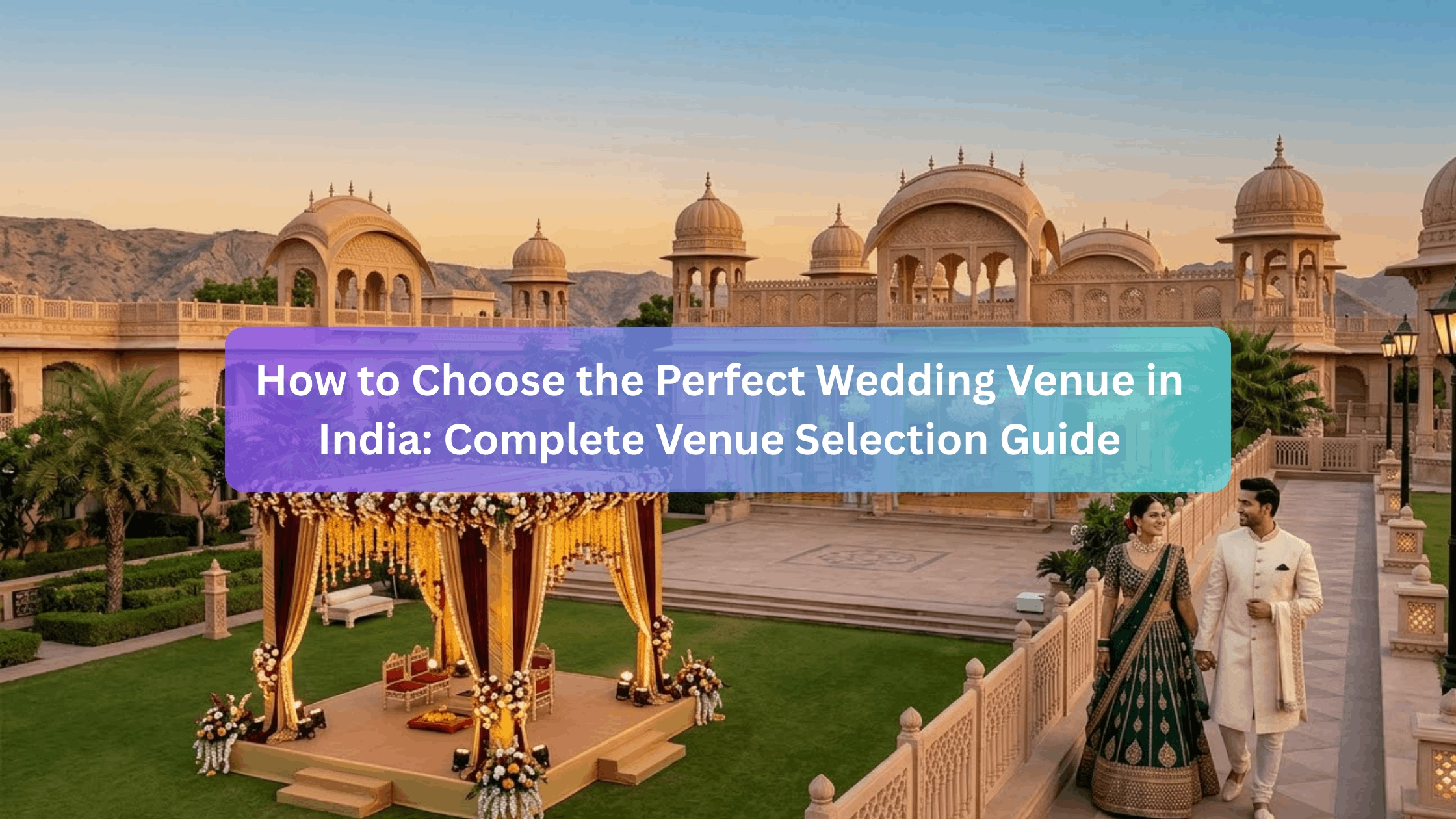
To choose the perfect wedding venue in India, you must calculate exact usable floor space, align your budget with the venue-to-décor ratio, audit power loads for heavy lighting, and secure hard-walled backup spaces. The venue dictates up to 50% of your total wedding cost.
Stop booking venues based on aesthetics. The right venue simplifies everything. A bad venue choice destroys your budget, ruins guest comfort, and traps your vendors in a logistical nightmare.
Choosing the perfect wedding venue is the foundation of your entire event. At Event Zone EMG, We audit properties daily. Families constantly ask how to select the right space. The answer is not about finding a beautiful sunset view. It is about matching your event flow, guest list, and budget to hard concrete infrastructure. Today, you get our exact, planner-level selection framework. No fluff. Just hard data.
👉 Complete Indian Wedding Planning Guide
The Real Cost of Booking Blind
Hotel sales teams sell illusions. They hand you glossy brochures. They show you empty lawns at golden hour. They do not show the chaos of 600 guests fighting for three valet stations. Booking a space without understanding the underlying math is financial suicide.
Your venue alone determines 40 to 50 percent of your total wedding experience and budget. It controls how smoothly your events run. It dictates how efficiently vendors execute. A poor venue choice leads directly to budget overruns, guest discomfort, and severe vendor coordination issues.
You sign the contract blindly. You pay the deposit. Then the nightmare begins. The hotel suddenly enforces a massive royalty fee for your preferred decorator. You lose money instantly. We do not operate on assumptions. We operate on exact dimensions and legal clearances.
The 3 Core Decision Factors (Capacity, Budget, Location)
Every successful venue selection comes down to three non-negotiable metrics. Ignore them. Watch your event fail.
1. Guest Capacity (The Hard Math)
Your venue must fit your guest count. It must fit them comfortably. Venues lie about their maximum capacity. A hotel manager tells you a banquet hall holds 500 people. They calculate raw, empty square footage. They expect your guests to stand shoulder-to-shoulder against the wallpaper.
You must calculate the actual usable space. Floor plans shrink instantly once you build the infrastructure. A reception stage consumes 400 square feet. A Sangeet dance floor eats another 600 square feet. Buffet stations block entire walkways.
Planner Rule:
- Allocate 30–40 square feet per guest for seated events.
- Allocate 15–20 square feet per guest for floating crowds.
Real Scenario (Indore):
I see this constantly in Indore. A family books a luxury farmhouse designed for 250 guests. They invite 400. The result? Total gridlock. Food queues stall immediately. Waiters cannot move heavy trays between tightly packed tables. Guests leave angry and hungry.
2. Budget Alignment and the Décor Trade-off
Venue selection directly controls your bank account. In most Indian weddings, your venue rental plus catering consumes exactly 50% of your total budget. Do not look at the base rental fee in isolation.
Understand the venue-to-décor ratio. A premium five-star hotel demands high rental fees but requires minimal décor. The architecture already looks finished. A raw outdoor farmhouse charges lower rental fees. However, it forces you to spend lakhs on heavy carpeting, ceiling draping, and lighting trusses just to fill the empty visual space. Pick your financial poison early.
👉 Event Budget Planning Guide
3. Location and Accessibility
A breathtaking hilltop resort loses all value instantly if your guests cannot reach it. You must factor in road connectivity, parking density, and distance from major transit hubs. A bad location kills the mood before the party even starts.
Planner Insight:
For local weddings in cities like Indore, limit your venue search strictly to a 20–30 minute travel radius from the city center. If you force guests to drive an hour into the outskirts for an evening reception, your turnout drops by 30%. Punctuality disappears entirely. The bride enters an empty room.
Types of Wedding Venues in India (With Planner Insights)
Choosing the right type of property dictates how your vendors operate. You must match the architecture to your specific event goals.
Banquet Halls & Convention Centers
Best suited for: 100–300 guests, indoor weddings, and budget-controlled events.
Planner Insight: Banquets offer extreme cost efficiency and absolute climate control. You eliminate weather risks entirely. However, you sacrifice visual scale. Low ceilings restrict massive floral installations and complex lighting trusses. Your decorator cannot build vertical height.
Common Mistake: Booking a small banquet for a large guest list. The room heats up instantly.
Luxury Hotels & Resorts
Best suited for: 200–500 guests, premium weddings, and multi-day celebrations.
Planner Insight: Hotels reduce your coordination stress massively. They bundle the food, the rooms, and the event space into one contract. But they protect their margins aggressively. Expect strict outside-vendor restrictions. They will charge you hidden taxes for bringing your own specialists.
Farmhouses & Outdoor Lawns
Best suited for: 300–1,000+ guests, massive Sangeet nights, and theme-heavy weddings.
Planner Insight: Lawns give you a blank canvas. You get maximum creative flexibility to build massive sets. The tradeoff is immense operational risk. You hold total liability. You must rent backup generators, build heavy weather-proof structures, and manage mobile luxury restrooms.
Destination Wedding Venues
Best suited for: 50–200 guests, high-end luxury events, and close-knit family buyouts.
Planner Insight: You drop the guest count. You spike the per-head cost. Destination events require complex, military-grade logistics. You pay for vendor flights, heavy freight shipping for décor materials, and total guest hospitality from the airport to the hotel.
👉 Indian Wedding Planning Checklist
The Advanced Venue Selection Framework (Used by Planners)
Professional planners do not wander into hotels and ask for brochures. We run a calculated audit. We strip the emotion out of the decision. Use this 5-step framework to secure the right property fast.
Step 1: Define Your Priorities
Are you optimizing for budget or visual experience? Do you want a compact, climate-controlled flow, or expansive outdoor grandeur? Pick one. You cannot have both cheaply. Define this before you inspect a single property.
Step 2: Shortlist 3 to 5 Venues Only
Avoid option paralysis. Looking at 15 venues delays your decision. It confuses the families. Top properties sell out fast on auspicious wedding dates. Narrow the list down to the top contenders and act aggressively to secure the booking.
Step 3: Compare Total Cost, Not Just Rental
Do not look at the base rental fee. Calculate the final, brutal invoice. Always add the mandatory catering minimums, the electricity surcharges, the cleaning fees, and the vendor royalty taxes. A “cheap” venue often hides massive operational costs in the fine print.
Step 4: Audit Vendor Flexibility
Venues enforce monopolies. If a property forces you to use their terrible, overpriced in-house decorator, walk away. Venues with strict monopoly policies drain your budget and ruin your visual aesthetic. Demand the right to bring your own team.
Step 5: Stress-Test the Event Flow
Map the physical movement. Can the property handle a morning Mehendi, an afternoon Haldi, and an evening Sangeet without forcing guests to walk through dirty service corridors? Ensure distinct, separate spaces for each function so your setup team has time to work.
The Master Operational Audit: 6 Phases of Venue Logistics
This is where amateur planners fail. They look at the chandeliers. We look at the concrete. We audit the copper wiring. Before you sign a contract, you must run this exact technical inspection. It separates a flawless event from a complete disaster.
Phase 1: Cultural Infrastructure & Ritual Logistics
Indian weddings break standard event rules. You need extreme spatial planning. A beautiful property means nothing if it cannot handle the physical chaos of your traditions.
Baraat Assembly and Traffic Clearances
Roads dictate the procession. A luxury property is useless if the approach road cannot handle a 150-person dancing crowd alongside a horse chariot. Local traffic backs up immediately. The police will shut you down. Verify the turning radius at the main gate. Ensure the mobile DJ truck can physically make the turn into the driveway. Secure written permission from local authorities for street usage.
Mandap Siting and Havan Ventilation
Smoke destroys indoor events. You place a traditional havan kund inside a five-star banquet hall. You ignore the HVAC extraction rates. The sacred fire creates thick smoke. The fire alarms scream. The sprinklers activate and ruin the silk décor. Guests choke. Demand the exact CFM (cubic feet per minute) extraction rating from the chief engineer. If the venue relies entirely on standard recirculating AC units, you move the mandap outside. Period.
The Multi-Event Space Squeeze
Stop paying triple rent. Hotels want to charge you separate, massive rental fees for the Haldi courtyard, the Mehendi poolside, and the Sangeet ballroom. This bleeds your budget dry for no reason. Force the sales manager to bundle a “function space” rate. Negotiate a complete property buyout if your guest list is large enough.
Phase 2: F&B Operations and Catering Monopolies
Food controls the guest experience. Control the kitchen. If the food fails, the entire wedding is a disaster, regardless of how much you spent on flowers.
Dual Kitchens for Strict Dietary Separation
Inspect the back rooms. Many Indian families demand absolute, pure vegetarian food preparation. A single shared hotel kitchen is an automatic dealbreaker. Do not trust a verbal promise from a sales rep. Walk into the kitchen yourself. Look for physical, structural walls separating the vegetarian and non-vegetarian prep lines. If they share the same walk-in freezer or frying vats, walk away immediately. Cross-contamination will cause a family revolt.
Cracking the “In-House Caterer” Trap
Venues protect their margins. They legally force you to use their mediocre, overpriced in-house catering team. They ban outside food vendors in the contract to trap your budget. Fight this exclusivity clause. Negotiate a flat “kitchen usage fee.” This specific contract amendment legally allows you to bring your own specialized Halwai or regional master chef while the hotel still makes a minor profit.
Alcohol Licenses and Corkage Fees
Liquor costs kill budgets. A premium hotel will gladly charge you ₹3,000 per bottle just for the privilege of opening your own legally purchased alcohol at their bar. Refuse the standard per-bottle corkage rate. Cap it at a flat fee for the entire night. More importantly, when you bring your own outside alcohol, you must secure a one-day temporary liquor license (like an FL-5). The venue’s annual license will not protect your outside bottles. Do not assume the hotel will handle the paperwork. If the state excise department raids your Sangeet and you do not physically hold that one-day permit, authorities seize the alcohol instantly. The party ends.
Phase 3: Technical Specs, Power Loads, and Weather
Power grids fail. India has aggressive weather. Prepare for the worst. If you ignore the technical infrastructure of a venue, your wedding will go dark.
Generator Backup and Heavy Amperage
Standard plugs melt. You cannot run a heavy DJ truss and a massive 40-foot LED wall off standard hotel wall sockets. You will trip the main breaker within five minutes. The music stops. Calculate the exact KVA your production team needs. Demand a dedicated, synchronized 125 KVA backup generator solely for the stage and lighting. Force the venue to guarantee this secondary power source in writing.
Structural Rigging Limits
Ceilings collapse fast. A bride wants a massive, 500-kilo fresh floral chandelier hanging directly over the dance floor. Nobody asks the chief engineer. If the roof lacks reinforced steel rigging points, that chandelier crashes down on your guests. Demand the structural engineering spec sheet. Inspect the ceiling tracks yourself. If the venue only offers weak drop-ceilings, you must build an expensive ground-supported metal truss.
The Monsoon Trap: Why Tents Fail
Tents always leak. Event planners love selling expensive waterproof German tents for July weddings. They lie to you. The canopy might stop the rain. It does absolutely nothing to stop the ground from turning into a thick mud swamp. Designer lehengas drag through the mud. Heels sink into the grass. Never rely on a tent during the monsoon. Mandate a hard-walled, fully air-conditioned indoor backup ballroom in your contract.
Phase 4: Legalities, Licenses, and Sound Restrictions
Keep the cops away. You can plan the most visually stunning Sangeet in the city. It means absolutely nothing if the local police raid the property mid-performance. Venues rarely volunteer legal warnings. They just want your deposit. You must audit the local laws yourself.
Surviving the 10 PM Outdoor Sound Ban
The law is absolute. The Supreme Court mandates a strict outdoor sound blackout at 10 PM across India. Police will shut down your event and confiscate your DJ equipment if you ignore this mandate. Do not argue with local authorities. Build a seamless indoor after-party transition directly into your timeline. Move the crowd to a soundproofed, pre-decorated ballroom at 9:45 PM sharp. Have the indoor DJ already spinning as the outdoor music fades. Keep the bar open inside to pull the guests indoors fast.
PPL and Novex Music Copyright Licenses
Copyright agents hunt weddings. If your DJ plays commercial Bollywood tracks or international hits, someone must legally hold the PPL and Novex licenses. Hotels routinely shift this massive legal liability onto the client in the microscopic fine print. Demand the venue provides proof of their annual blanket license. If they do not have one, you must purchase a short-term event license immediately. If you skip this, copyright inspectors will crash your reception with a massive penalty invoice.
Phase 5: Accommodation and Guest Hospitality
Manage your out-of-town relatives aggressively. If guests wait in the lobby for five hours with their luggage, they will complain for the rest of the week. You must control the hotel’s room inventory like a military operation.
Early Check-Ins and The Hospitality Desk
Flights arrive early. Standard hotel check-in begins at 2 PM. If you have 100 guests arriving on a 9 AM flight, chaos ensues. Negotiate guaranteed early check-ins for at least 30% of your contracted room block. Set up a dedicated hospitality desk in the lobby run by your event team. Distribute room keys, welcome hampers, and event itineraries instantly upon arrival. Do not let your guests stand in the regular hotel reception line.
Wash-and-Change Rooms for Day Guests
Local guests need space. They attend the morning Haldi, leave the property, and return for the evening reception. They will ruin your room logic if you ignore them. Secure temporary holding rooms. Book three large, standard suites specifically for day guests to shower, store bags, and change outfits between functions. This keeps your main guest rooms pristine and stops massive overcrowding in the public lobby restrooms.
Phase 6: Mastering the Venue Contract (Hidden Fees)
Read the fine print. Venue contracts are designed to extract maximum profit through hidden penalties. If you sign the standard hotel template, you give them permission to drain your contingency fund. We rewrite contracts entirely.
The “Minimum Guarantee” Trap
Protect your headcount. Venues force you to guarantee a minimum number of plates. If you guarantee 500 guests and only 400 show up, you pay for 100 phantom meals. Negotiate a highly conservative minimum guarantee. Add a specific clause allowing a 15% upward buffer for last-minute arrivals without paying aggressive penalty rates. You can always add plates on the day of the event. You can never subtract them.
Hidden Costs: Security, Cleaning, and Vendor Royalties
Hotels sneak junk fees everywhere. They charge you for extra housekeeping, mandatory bouncers, and electricity usage. They even charge your outside decorator a “vendor royalty” just to step foot on the property. Strike these line items from the contract entirely. Refuse the vendor royalty fee. Demand a flat, all-inclusive rate that covers basic security, standard electricity, and post-event cleaning. Do not sign the deposit check until the sales director initials these exact changes.
Questions to Ask Venue Managers (Critical)
Before finalizing any venue, force the sales manager to answer these exact questions in writing. Do not accept verbal assurances.
- What is the exact usable guest capacity (seated versus floating)?
- Are there any mandatory vendor royalty fees if I bring my own decorator?
- Do you have a dedicated, physical dual kitchen for strict vegetarian prep?
- What is the KVA rating of your backup generator, and is it dedicated to the event space?
- Do you hold current PPL and Novex blanket music licenses?
- What is your exact written policy for indoor weather backups?
- Are there hidden taxes for corkage, cake-cutting, or late-night electricity?
- What are your exact cancellation and refund policies?
👉 Event Planning Mistakes & How to Avoid Them
Top Wedding Venue Options in Indore (Planner Perspective)
Indore is a massive wedding hub. It offers a perfect balance of affordability and premium infrastructure. However, you must pick the right property type based on your exact logistics.
Luxury Hotels
Best for: High-end weddings, reception events, and heavy guest accommodation.
Planner insight: Hotels along the bypass road reduce coordination stress entirely. They manage the food and the rooms perfectly. But they increase overall costs due to strict package pricing and vendor monopolies.
Banquet & Convention Centers
Best for: Mid-scale weddings and strict budget-controlled events.
Planner insight: These venues offer incredible cost efficiency. They keep your guests cool in the summer heat. However, they require smart, calculated décor investment to make the space look premium without overcrowding the floor.
Outdoor Lawns & Resorts
Best for: Large weddings, massive Sangeet productions, and reception events.
Planner insight: Perfect for grand, structural setups. But they require aggressive planning for logistics, heavy generator rentals, and ironclad weather backups.
How Venue Choice Impacts Budget & Décor
Venue and décor are directly connected. You cannot plan one without the other.
A premium hotel demands high rental fees but requires minimal décor because the existing architecture is beautiful. A farmhouse charges a low rental fee but forces you to spend heavily on masking the raw space. A banquet hall sits right in the middle, balancing both. Understanding this financial trade-off prevents you from running out of money before you even hire a photographer.
👉 How Much Does a Wedding Cost in India
Final Thoughts: The Right Venue Simplifies Everything
Choosing the perfect wedding venue is an operational science. It is not just about aesthetics. It is about making a ruthless, calculated decision that supports your entire wedding plan.
Do the math. Read the fine print. Protect your money. The right venue ensures a flawless guest experience, smooth event execution, and a strictly controlled budget. With the right planning approach, you secure a property that actually delivers on its promises.
If you want expert support auditing contracts, managing vendors, and executing your wedding seamlessly, bring in the professionals. We fix the logistics so you can actually enjoy your wedding.
👉 Contact Event Zone EMG | Explore Event Planning Services
Frequently Asked Questions (FAQ)
How do you choose the perfect wedding venue in India?
You choose the perfect venue by calculating exact usable floor space, aligning your budget with the venue-to-décor ratio, auditing power loads, and securing hard-walled indoor backup spaces. Never book based purely on aesthetics or hotel brochures.
How far in advance should you book an Indian wedding venue?
You must book your wedding venue at least 9 to 12 months in advance. High-demand auspicious dates sell out rapidly. Securing the venue early locks in your pricing and protects your overall budget from annual inflation hikes.
What are hidden costs at wedding venues?
Hidden venue costs include vendor royalty fees, per-bottle alcohol corkage charges, cake-cutting fees, mandatory security guards, and heavy electricity usage surcharges. You must identify these junk fees and strike them from the contract before paying the deposit.
Do I need a license to play music at my wedding?
Yes, you strictly require PPL and Novex copyright licenses to play commercial Bollywood or international music at any public venue in India. If the hotel lacks an annual blanket license, you must purchase a short-term event permit.
